Table Of Content
- The House passed a key foreign aid package. Catch up on what happened
- Defense Secretary Lloyd Austin says foreign aid bills will allow department "to surge lifesaving security assistance"
- French Architecture – History of Building Styles in France
- Art Deco Architecture – The History of 1920s Art Deco Architecture
- Oak Alley Plantation
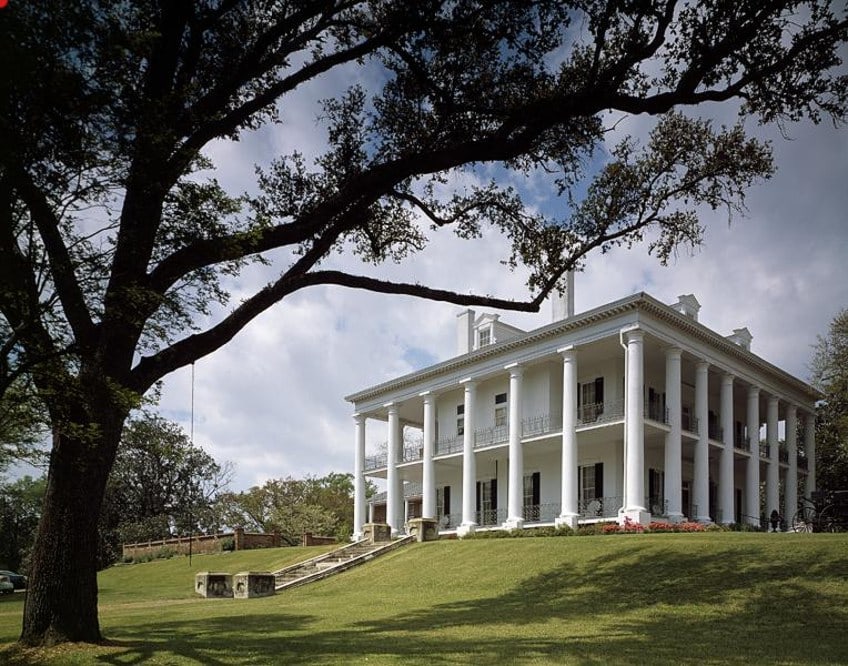
Most antebellum mansions are big, boxy, and symmetrical with central doors in the front and back, terraces, and pillars or columns. This luxurious architectural style was prominent throughout the United States in the first part of the 1800s. Frederick Stanton, who was born in Northern Ireland, erected Stanton Hall in 1859. The southern plantation mansions, such as Stanton Hall, erected before America’s Civil War, showed affluence and the grandiose Revival architectural styles of that period. In 1846 Mudd married Florence Earle and began building a larger home in place of Hall's, which he called The Grove for the numerous old hardwood trees surrounding the house site.
The House passed a key foreign aid package. Catch up on what happened
The Southern states had great growth in GDP and affluence, which resulted in a construction boom and the creation of a distinct architectural style. Adding more dramatic flair to the homes' exteriors, many southern-style homes had sloping exterior staircases. Tall, vaulted ceilings didn't just make southern homes appear grand, they helped alleviate the heat and humidity that accumulated inside the home, too. Heat rises, so ceilings were raised and vaulted to capture hot air above living spaces. One prime example of an antebellum house is the Old Governor’s Mansion in Milledgeville, Georgia.
Defense Secretary Lloyd Austin says foreign aid bills will allow department "to surge lifesaving security assistance"
Many southern-style homes have been converted into historic sites, but some original homes have inhabitants today. Cluskey designed this antebellum house with a symmetrical facade, ionic-style columns supporting a jutting pediment, and large six-over-six windows. It was the home of many chief executives of Georgia and even played a part in the Civil War.
French Architecture – History of Building Styles in France
Many of the estates closest to New Orleans are along the River Road corridor, a stretch of land that runs for nearly seventy miles along the Mississippi. Beginning with Oak Alley in 1925, the “Big Houses” on River Road began to be restored. In recent years, programs have been put in place to allow visitors to hear the whole story of life in the Old South–not just the glamorized Hollywood version. Founded in 1676 by Thomas Drayton, Magnolia Plantation and Gardens is renowned for its beautiful gardens and rich history. Located along the banks of the Ashley River near Historic Charleston, S.C., the 464-acre property has survived natural disasters, as well as both the American Revolution and Civil War.
Antebellum Architectural Style
Circa, 1830, St. Joseph, has been family owned since 1877 and is one of the few fully intact sugar cane plantations in the River Parishes. Composed of 2,500 acres (including its "sister" property, Felicité), St. Joseph stretches back from the Mississippi River as far as the eye can see. Take a walk through time as you enjoy a fascinating glimpse into the lives of the many interesting people who have called St. Joseph home. Unlike other plantations, Whitney Plantation doesn’t sugarcoat the lives of enslaved Africans who worked the former indigo and sugar farm. Jim Cummings, the owner of Whitney Plantation, has spent millions on the museum’s artifacts and restoration to give visitors a true sense of life in the antebellum South.
People can also attend two lunches that are open to the public at noon May 18 and 19.
They’re homes like Gone With the Wind’s palatial Tara with its stately columns and broad, covered veranda. To truly understand American history is to know what life was like for both the owners of the “Big Houses” and the enslaved workforce who made them prosperous. Most of the most storied antebellum estates have adapted their tours to tell “the whole story.” The truth is just a short drive from New Orleans. Destrehan paved the way for the Creole system of slave labor, in which head slaves were appointed to oversee tasks on sugarcane plantations. Although the history is dark, the plantation’s costumed historical interpreters do an excellent job of telling the rich stories of the Destrehan family and the slaves who worked there. Established in 1787, Destrehan Plantation was originally a thriving indigo plantation and sugarcane farm.

Lady A coming to the Lexington Opera House next month - LEX 18 News - Lexington, KY
Lady A coming to the Lexington Opera House next month.
Posted: Thu, 16 Nov 2023 08:00:00 GMT [source]
One of its most remarkable features is the mansion’s magnificent entry hall, which boasts a spectacular spiral staircase and a domed ceiling with an ornate plaster frieze. One might confuse it for a Greek Revival architect, but it is really one of the greatest examples of Antebellum architecture. The first “porch hangouts” were antebellum estates’ large verandas and balconies. Columns and porticos evoke a feeling of grandeur and significance while also providing shade and protection from the hot Southern heat.
A foreign aid package passed by the US House of Representatives will “exacerbate global crises,” Russian Foreign Ministry spokesperson Maria Zakharova said in a statement to CNN on Saturday. US Defense Secretary Lloyd Austin on Saturday celebrated the House's passage of a $95 billion foreign aid package for Ukraine, Israel and the Indo-Pacific. If the Senate votes to approve the TikTok legislation, it heads to the desk of Biden, who endorsed the prior version of the bill and may quickly sign any foreign aid package that includes similar language targeting TikTok. John and Ruth Sowden, for which the house was originally built, were artsy Hollywood folks who liked to party. Therefore, Lloyd Wright, who had been designing sets for Paramount Studios at the time, indulged their desire for the theatrical.
Oak Alley Plantation
The new owners built the playhouse for their 6-year-old son, in view of the kitchen and the watchful eye of two Black servants, Jane Johnson and Alice Sims. At first, I thought she was suggesting that the playhouse was not what the placard and interactive website said it was. About 1,500 people visited Natchez in the home tour’s inaugural year, 1932. Today, the town attracts more than one million visitors annually, making it and its encompassing Adams County one of the most popular destinations in the state. In 2013, county tourism topped $110 million and accounted for nearly one-fifth of local employment.
The event took its name from the belief among its organizers that Pilgrimage was just that — a journey to houses whose grandeur, scale and history represent something sacred for Mississippi and all of the South. Homeowners and docents often dress in period clothing to facilitate the time travel. While the home and grounds are unquestionably the highlights of Rosedown Plantation, the outbuildings provide unique insights into the plantation’s past. From the carriage house to the restored slave cottage, these structures paint a more full picture of life on the property, including the slaves’ difficulties and sorrows. The interior of the estate is similarly remarkable, with magnificent furnishings and historical elements that provide an insight into the antebellum South’s grandeur.
Vehicle barrels through a yard, slams into a Murfreesboro home, then takes off - News Channel 5 Nashville
Vehicle barrels through a yard, slams into a Murfreesboro home, then takes off.
Posted: Mon, 07 Aug 2023 07:00:00 GMT [source]
Following Napoleon’s fall in 1815, an increasing number of Europeans came out to try their fortunes in America. Many of these immigrants purchased property to grow in-demand goods like tobacco, sugar, cotton, and indigo, or became dealers of these crops, ushering in the South’s great plantation era. They also imported slave labor, allowing the planters to keep the majority of the income for themselves.
Houses in the Greek Revival style were typically painted in white to resemble stucco and stately mansions. With bold details in simple moldings, gables, heavy cornices, and pediments, it is hard not to fall in love with this style of home. The gable-fronted facade is, in fact, one of the most enduring legacies of this style in the US. In the US, this style reached its peak from 1825 to 1860 during the early Civil War. Greek Revival became the first recognized national style of US architecture as it gained popularity from the East Coast to the West Coast and beyond.
In 1850, a lovely plantation home was built upon the property by English architect John Wind. Stanton Hall in Mississippi is notable for its large columns, decorative ironwork, and opulent interior decorations, which include Italian marble fireplaces, intricate plasterwork, and crystal chandeliers. The mansion’s magnificent ballroom, with 18-foot ceilings, gilded mirrors, and a spectacular crystal chandelier, is the mansion’s focal point.
Not only did these basements protect the main living spaces from flooding, but they also provided additional storage space for the inhabitants. John Harding commissioned architects in the 1820s to build a Federal style antebellum home. The English ideas of the country house also influenced European immigrants. These country houses featured graceful gardens, formal facades, and elegant details, representing the owner’s place in society. “This the real house right here,” she said, or something like it, when she got there. It reminded me of what I had heard on a call with Rhondalyn Peairs, a University of Mississippi graduate student and founder of the Oxford, Mississippi–based tourism and educational services company Historich.
The enchanted site, where Malibu Creek meets the Pacific Ocean, was once home to the Chumash Indians, who thrived there until the late 18th century. The Rindge family’s daughter, Rhoda, and her husband, Merritt Huntley Adamson, used the site to construct a beach house, now the historic Adamson House museum. The Tullis Toledano manor was built in 1856 by a cotton merchant Christoval S. Toledano.




No comments:
Post a Comment